

Somewhere between the 2 a.m. feedings and the hundredth photo of tiny toes, it hits you: this little person depends on you for everything. That feeling is love — and it’s also the moment a lot of new parents start thinking seriously about protection.
If you’re researching life insurance after having a baby, you’re doing something wonderful for your family. And you don’t need to be an expert to get it right. You just need a clear plan.
This simple checklist walks you through exactly what to do — how much coverage to consider, which type makes sense, what it might cost, and the small details (like beneficiaries) that new parents often miss. No pressure, no jargon. Just the steps.
Table of Contents
Why a New Baby Changes Your Life Insurance Needs
Before your baby arrived, your finances might have mostly affected you (and maybe a partner). Now there’s someone who will rely on your income and care for the next 18+ years.
Think about what your family would need if something happened to you:
- Everyday living costs like housing, groceries, and utilities
- Childcare, which can be one of the biggest costs of raising a child
- Your mortgage or rent so your family can stay in their home
- Future goals like college or trade school
- Debts such as car loans, student loans, or credit cards
Life insurance is simply a way to make sure those needs are still covered — even if you’re not there to provide them. It’s one of the most loving, practical things a new parent can do.
Your Checklist for Life Insurance After Having a Baby
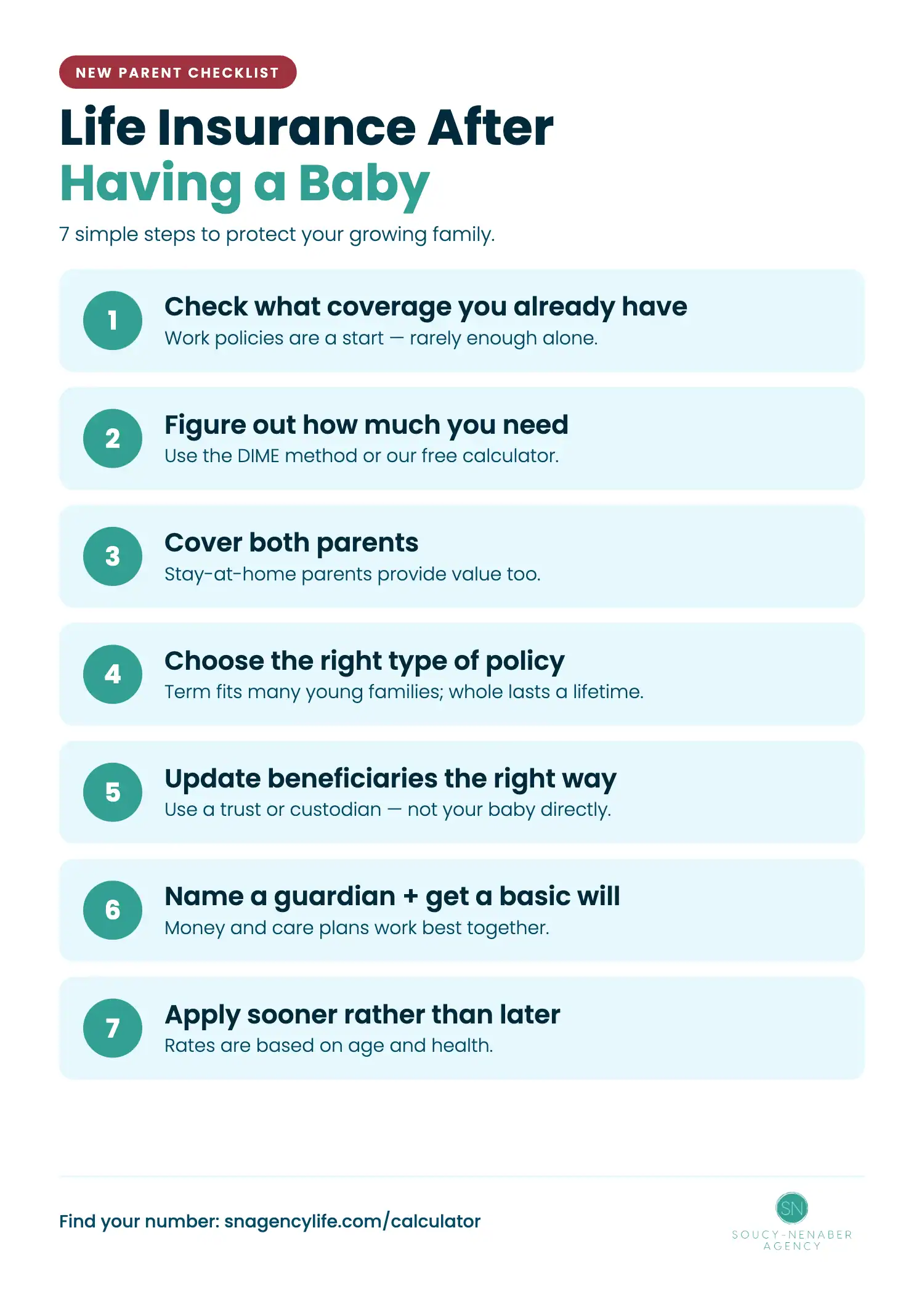
Step 1: Check what coverage you already have
Start with what’s in place. Many people have a small group policy through work. That’s a nice bonus, but it’s often only a year or two of salary, and it usually doesn’t follow you if you change jobs. For most new parents, it isn’t enough on its own.
Step 2: Figure out how much coverage you need
This is where most people get stuck — so keep it simple. The DIME method adds up four things: Debt, Income replacement, Mortgage, and Education. Our guide to how much life insurance you need using the DIME method breaks it down step by step.
Want a quick number? Use our free life insurance calculator. It takes a couple of minutes and gives you a solid starting point.
Step 3: Cover both parents — including a stay-at-home parent
This one gets missed all the time. A parent who stays home may not earn a paycheck, but think about what they provide: childcare, transportation, cooking, cleaning, and running the household. Replacing all of that would be expensive.
Both parents deserve coverage. (Moms are especially likely to be underinsured — here’s more on the women’s life insurance gap.)
Step 4: Choose the right type of policy
For many young families, term life insurance is a great fit. It covers you for a set period — often 20 or 30 years, roughly the years your child depends on you — and it’s usually the most affordable option.
Some families also like permanent coverage (like whole life) because it lasts a lifetime and can build cash value. Not sure which fits? Our plain-English guide to term vs. whole life insurance can help.
Step 5: Update your beneficiaries the right way
Here’s a detail new parents often don’t know: most insurers won’t pay a large benefit directly to a minor child. Instead, many parents name their spouse or partner as primary beneficiary, and then set up a trust or custodian for their child as a backup.
It’s worth talking to an estate planning attorney about the best setup for your family. While you’re at it, check the beneficiaries on any existing policies and retirement accounts too.
Step 6: Name a guardian and get a basic will in place
Life insurance provides the money. A will helps decide who would raise your child. These two pieces work best together. It’s not a fun conversation, but it’s a deeply important one — and once it’s done, you’ll feel lighter.
Step 7: Apply sooner rather than later
Life insurance is generally based on your age and health, so the younger and healthier you are when you apply, the better your rates are likely to be. Waiting rarely makes it cheaper.
If you’re still pregnant, it’s worth asking about timing. Some insurers handle applications during pregnancy differently, so a good agent can tell you whether to apply now or shortly after delivery. Our tips for applying for life insurance will help the process go smoothly.
How Much Does Life Insurance Cost for New Parents?
Most people overestimate the cost. Many healthy parents in their 20s and 30s can get a meaningful term policy for less than they’d guess — often comparable to a monthly streaming bill or two.
Your price depends on a few things:
- Your age
- Your health and medical history
- Whether you use tobacco
- The amount of coverage
- The length of the term
The best way to know your real number is to get a quote. Because SN Agency is non-captive, we compare options from 30+ top-rated carriers to find a policy that fits your family and your budget.
Common Mistakes New Parents Make
Avoid these and you’ll be ahead of most families:
- Relying only on work coverage. It’s helpful, but rarely enough — and it can disappear with a job change.
- Only insuring one parent. Both parents provide value that would need to be replaced.
- Naming a minor as a direct beneficiary. Set up a trust or custodian instead.
- Putting it off. Rates generally rise with age, and life gets busier — not slower.
- Buying too little. Run the numbers with the DIME method or our calculator first.
For a deeper look at protecting a growing household, read our guide to the best life insurance for young families. And if you’re newly married too, our life insurance for newlyweds guide covers that first-year setup.
For an unbiased overview of policy types, the National Association of Insurance Commissioners (NAIC) also has a helpful consumer guide.
Peace of Mind for Your Growing Family
Getting life insurance after having a baby isn’t about expecting the worst. It’s about knowing that no matter what, your child will be taken care of. Check what you have, figure out what you need, cover both parents, set up your beneficiaries correctly, and apply while rates are in your favor.
You don’t have to figure it out alone. Start with our free life insurance calculator to see how much coverage your family needs. Then book a free, no-pressure quote call — we’ll compare options from top-rated carriers and explain everything in plain English. Your little one is worth it.
Frequently Asked Questions
Should I get life insurance after having a baby?
For most parents, yes. A baby relies on your income and care for many years. Life insurance helps make sure housing, childcare, and future costs like college are covered if something happens to you.
How much life insurance do I need after having a baby?
It depends on your debts, income, mortgage, and education goals. The DIME method is a simple way to estimate it, and our free calculator can give you a starting number in minutes.
Can I get life insurance while pregnant?
Often, yes, though some insurers handle pregnancy differently during underwriting. An independent agent can compare carriers and tell you whether it makes sense to apply now or after delivery.
Does a stay-at-home parent need life insurance?
Yes. A stay-at-home parent provides childcare and household support that would be costly to replace. Coverage helps the family afford that care if needed.
Can my baby be the beneficiary of my life insurance?
Insurers typically won’t pay a large benefit directly to a minor. Many parents name a spouse as primary beneficiary and a trust or custodian for the child. An estate planning attorney can help you choose the right setup.