

If you’ve been Googling “is selling life insurance worth it,” you’re probably standing at a crossroads. You’re tired of being undervalued at a job that owns your calendar — and you’re wondering if this career is the real deal or just another pitch. We get it, because we asked the exact same question. Jamie came from nursing. Cory came from education. Neither of us came from sales. Here’s the honest answer we wish someone had given us before we made the leap — the good, the hard, and what actually makes it worth it.
Table of Contents
The Honest Truth About Whether Selling Life Insurance Is Worth It
Let’s not sugarcoat it. Selling life insurance is worth it for the right person — and a grind for the wrong one. The difference isn’t talent or a “sales personality.” It’s mindset, mentorship, and whether you’re willing to bet on yourself for 12 to 24 months while you build something that’s actually yours.
The numbers tell both sides of the story. According to the U.S. Bureau of Labor Statistics, insurance sales agents earned a median wage of about $60,370 in 2024, with the top 10% pulling in more than $138,020. There’s no salary ceiling and no boss capping your raise.
But here’s the part most recruiters won’t say out loud: more than 90% of new agents quit within their first year. Not because the opportunity isn’t real — but because they walked in alone, undertrained, and expecting overnight money. We’re going to make sure you walk in with eyes wide open.
The Real Pros: Why This Career Changed Our Lives
When people ask us if selling life insurance is worth it, we point to the things a W-2 paycheck never gave us. Freedom. Control. Work that actually means something.
Here’s what’s genuinely great about this career:
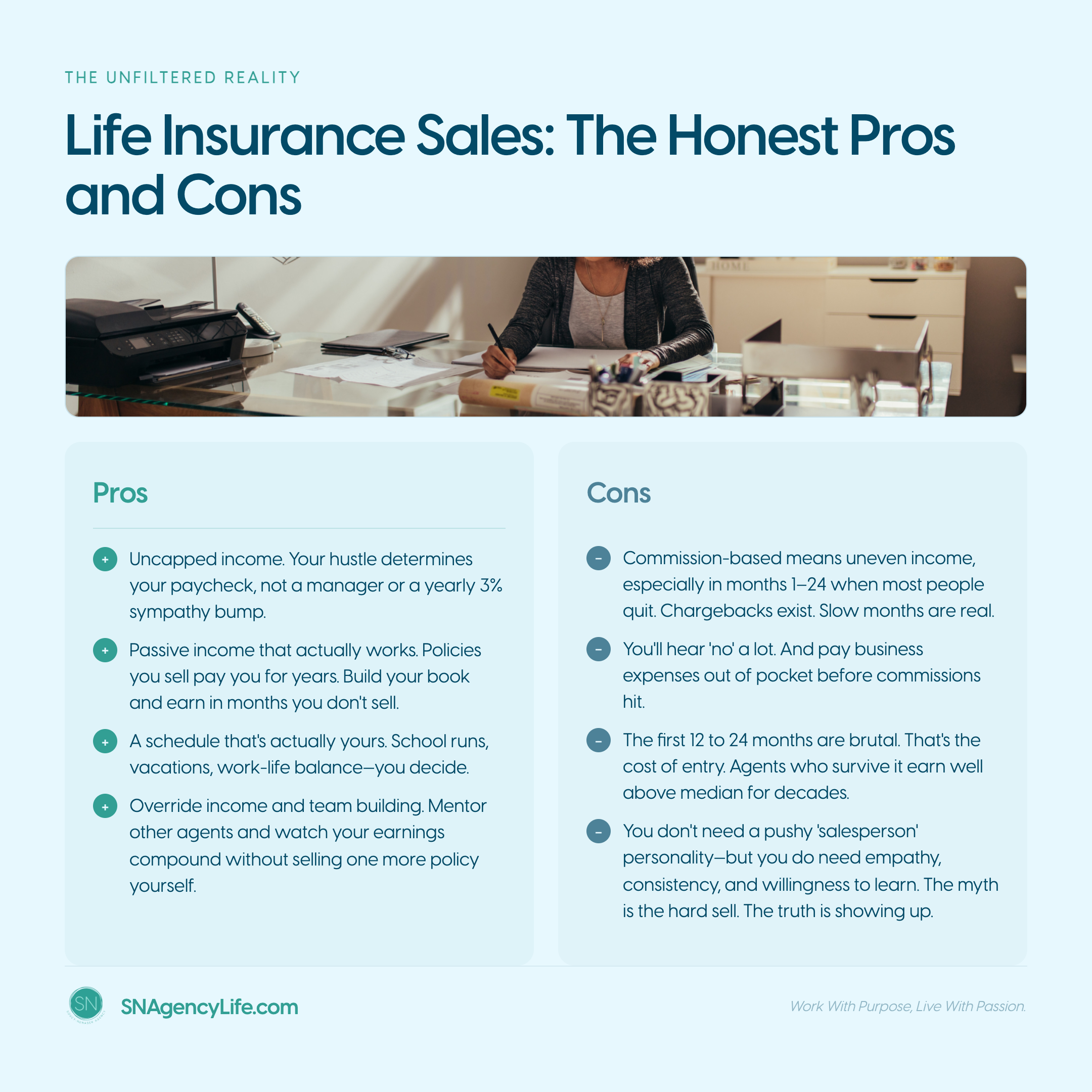
- Uncapped income. Your effort sets your pay — not a manager, not a pay band, not a yearly 3% bump.
- Renewal and passive income. Policies you sell can pay you for years. Build a strong book of business and you earn even in the months you don’t sell.
- A schedule you own. We take our kids to school, travel when we want, and work when it makes sense for our lives.
- Meaningful work. You’re protecting families on the worst day of their lives. That’s not a small thing.
- Growth beyond selling. Bring on and mentor other agents, and you can earn override income as you build a team.
We’re non-captive brokers contracted with 30+ top-rated carriers across 47 states under Symmetry Financial Group — which means we shop for the family, not for one company. That structure is a big reason this works.
The Real Cons: What Nobody Tells You
If we only gave you the highlight reel, we wouldn’t be the honest agents we promised to be. So here’s the hard part.
This is a commission-based career. That great month can be followed by a slow one, and the income doesn’t always arrive evenly — especially early. You’ll have business expenses. You’ll hear “no.” And if a client lets a brand-new policy lapse, you may have to pay back part of that commission through what’s called a chargeback.
The first 12 to 24 months are the hardest stretch. That’s exactly when most people quit. But the agents who push through that window tend to earn well above the median for the rest of their careers. The cost is front-loaded. The reward compounds.
The biggest myth we want to bust? That you have to be a slick, pushy “salesperson.” You don’t. We’re proof. Empathy, consistency, and a willingness to learn beat a sales personality every single time.
So, Is Selling Life Insurance Worth It For YOU?
This career is worth it if a few things are true about you.
- You’re self-motivated and don’t need someone standing over you.
- You’re coachable and willing to follow a proven system.
- You can handle a few hard months in exchange for long-term freedom.
- You actually like people and want to help them.
It’s probably not the right fit if you need a steady, predictable paycheck on day one or you’re hoping to get rich without putting in the reps. And that’s okay — knowing that now saves you a year of frustration.
The single biggest predictor of whether new agents make it isn’t experience. It’s mentorship. The ones who quit usually went it alone. The ones who thrive had someone in their corner who’d already walked the path. That’s the whole reason we do what we do.

How We Help You Skip the Hardest Part
We didn’t build SN Agency to hand you a script and wish you luck. We built it because we lived the burnout, made the leap from W-2 jobs, and figured out what actually works — then decided to bring others with us.
When you partner with us, you get real training, a proven system, access to 30+ carriers, and two former employees-turned-mentors who remember exactly what it feels like to start from zero. You don’t have to be fearless. You just have to be willing.
Frequently Asked Questions
Is selling life insurance worth it if I have no sales experience?
Yes — and it can actually be an advantage. We came from nursing and education, not sales. What matters most is being coachable, empathetic, and consistent. A proven system and a mentor matter far more than a “sales background.”
How much can you really make selling life insurance?
Income is uncapped and tied to your effort. The U.S. Bureau of Labor Statistics reports a median around $60,370, with top earners above $138,000. Renewals and team overrides can push it higher over time, but it’s commission-based — early income varies.
Why do so many life insurance agents quit?
More than 90% leave within the first year, usually because they started alone, undertrained, and expecting fast money. The first 12 to 24 months are the hardest. The agents who get mentorship and push through tend to do very well afterward.
Is the schedule really flexible?
It can be. As non-captive brokers, we set our own hours and build our business around our lives — not the other way around. Flexibility is earned through consistency early on, but it’s very real once you’re established.
Ready to Find Out If This Is Your Breakthrough?
Here’s the honest bottom line: selling life insurance is worth it when you have the right mindset and the right people behind you. The freedom, the income, the meaning — it’s all real. So is the hard part. The agents who win are simply the ones who don’t try to do it alone.
If any of this lit a spark, don’t overthink it — just find out if it could be a fit. Take our free Are You a Good Fit? agent quiz and get an honest read on whether this career matches who you are. No pressure. No pitch. Just the door — it’s up to you to walk through it. Let’s design a life you’re actually excited about.